Which should I read first: the main history or the biographies?
Text Size
To follow developments chronologically from 168 to 280, start with the main history's first chapter. If you already have a person in mind, begin with that biography's book description. These are different entry points; you need not buy the entire set to begin.
Choose Your Question before Your Platform
To understand who held titles, offices, and armies before and after a change, the main history offers a continuous chronological reading path. Its free first-chapter sample includes six background notes, letting you first see whether the terminology and narrative suit you.
For someone's life, changes of service, or relationships, the biographies' person-based approach is more direct. The volume placement is a reading location, not a lifelong single faction. First examine the description's content and material methods too.
Choosing among Four Biography Volumes
The Wei, Shu Han, Sun Wu, and Warlords volumes each have their own description. Enter by the person or state you want to explore; do not merge the four into one book or promise samples for editions without published samples.
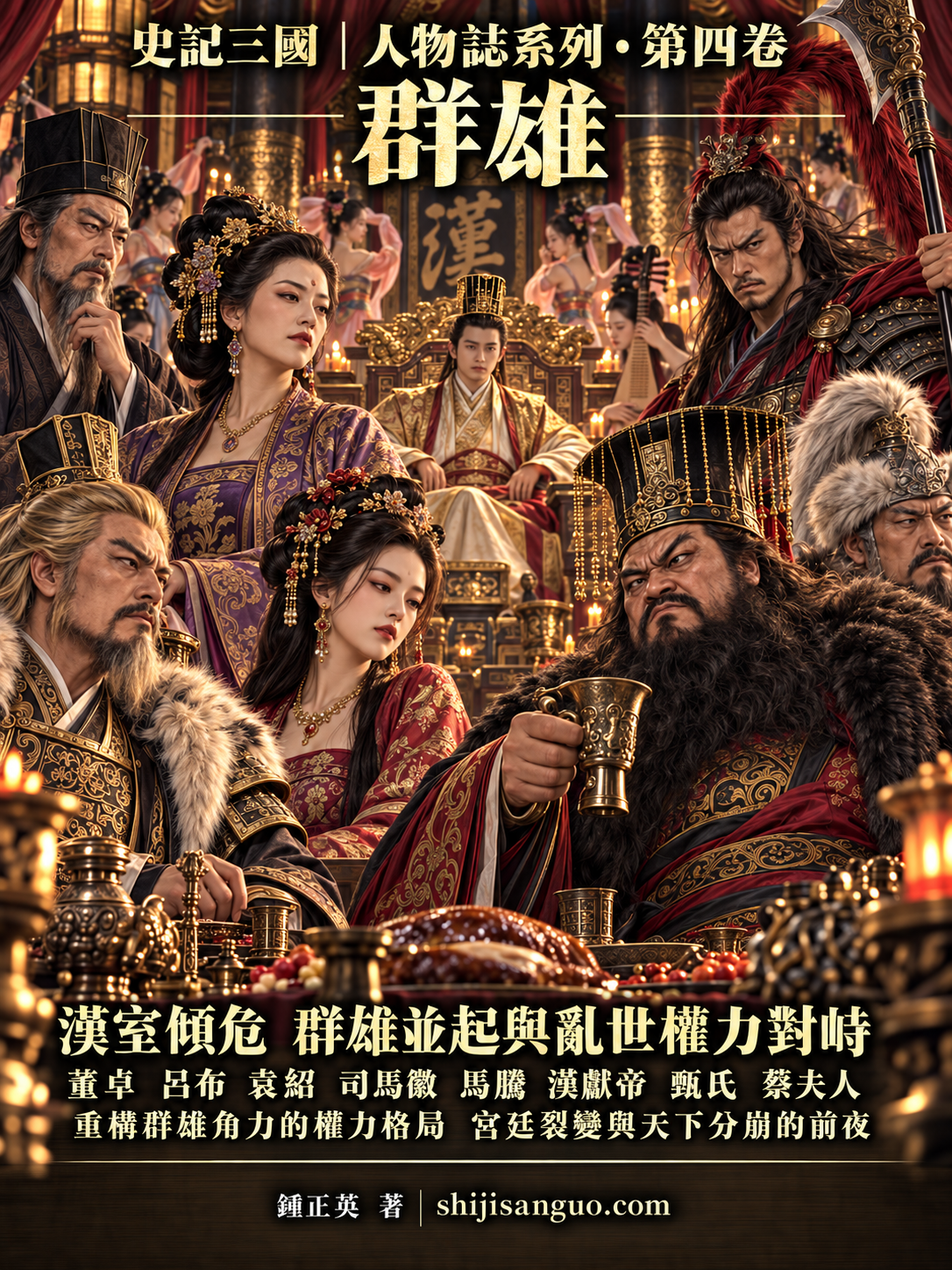
The Warlords volume directs attention beyond Wei, Shu, and Wu to figures of the late Han court, regions, and frontiers. Choose by the description's actual contents and method. Artistic reconstructions of people and object illustrations must be understood separately; a reconstructed image is not a historical portrait.
Separate Languages, Print, and Ebooks
One series may have different languages and formats. English paperback I contains Chapters 1–63; II contains Chapters 64–149. They are volume entry points, not one volume covering the full 168–280 history. First check the stated scope, then the actually available store links.
This page adds no prices, retail availability, or listing status. Bookstore prices have their own check dates and store locations; supply and checkout depend on the linked store. An edition without a verified purchase link is not therefore certainly unpublished.
Read a Passage before Choosing the Next Book
Start with the main history's free first-chapter sample: read the narrative first, or consult these six-term explanations. For a specific person, enter the second-level biography description. Returning to the bookstore still shows other editions and the same series; no external platform jump is needed to learn what the book covers.
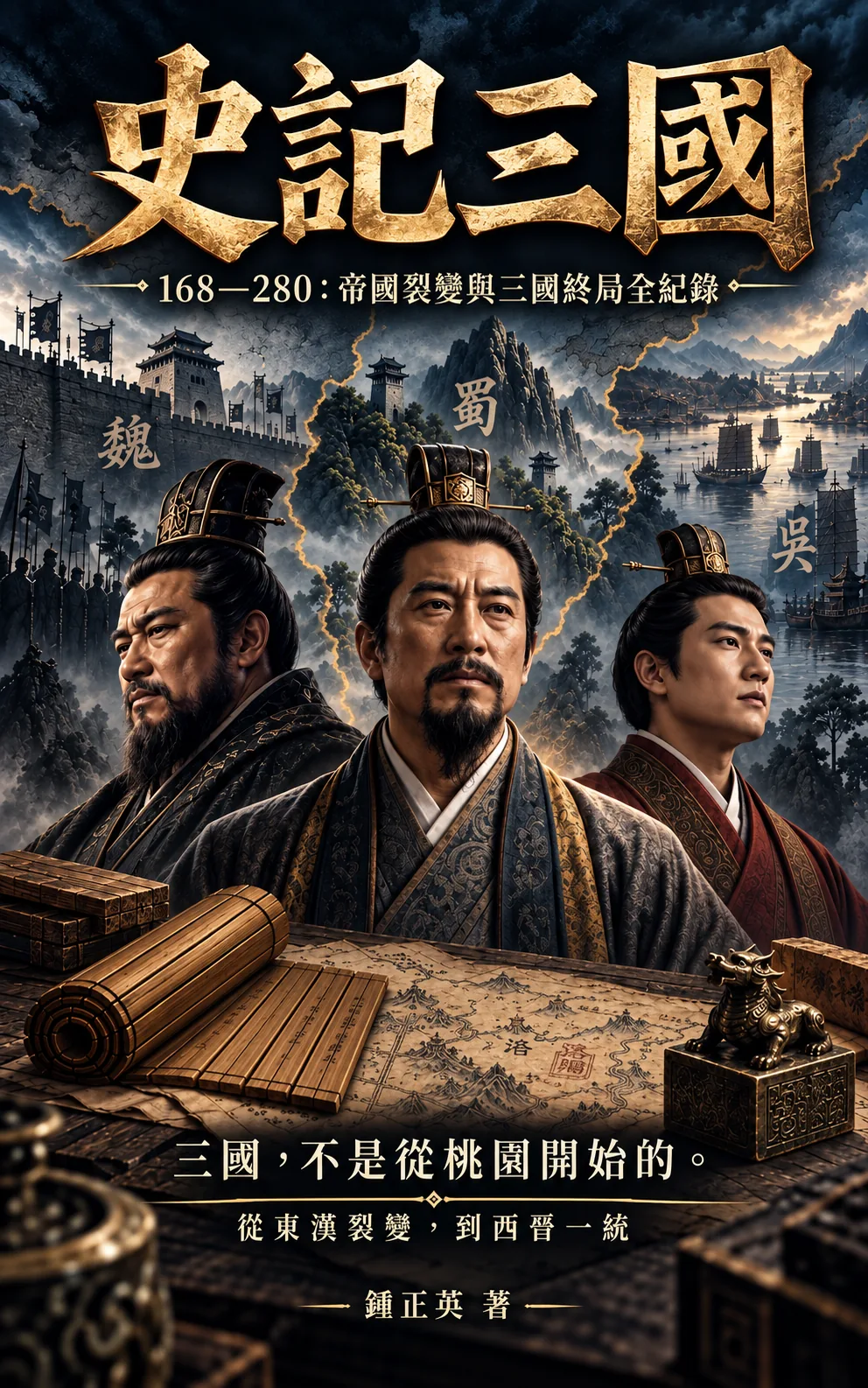
Shiji Sanguo covers 168–280 CE, from institutional fractures in the Eastern Han court to Western Jin reunification. It is a chronologically unfolding historical novel, a different series from the person-based Shiji Sanguo Renwuzhi (Biographical Profiles).
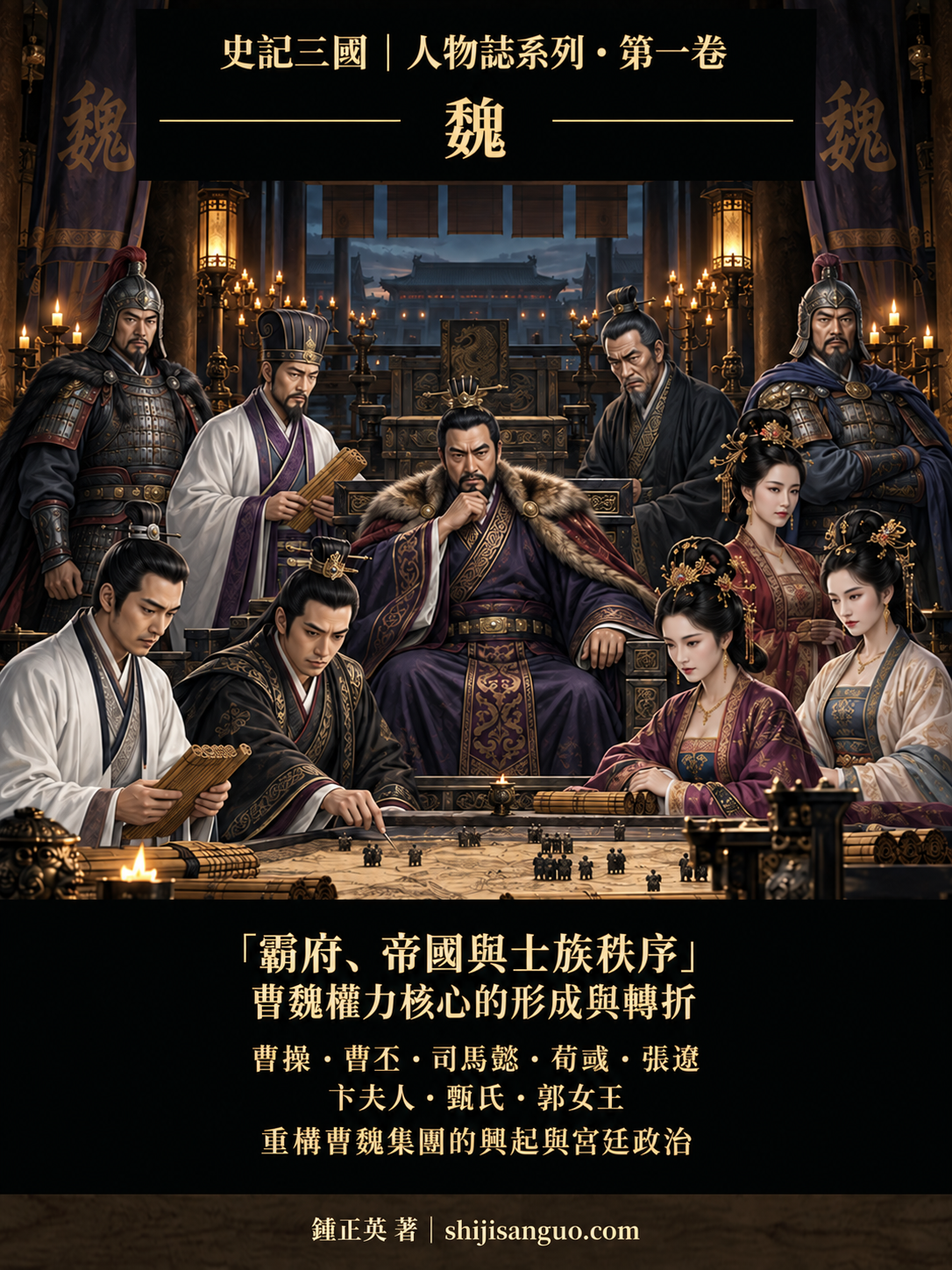
From Cao Cao and Cao Pi to power transitions in late Cao Wei, read Wei and the Wei–Jin succession through person entries. This volume also offers archaeological and site illustrations, distinguishing relationships, object identities, and unresolved matters.
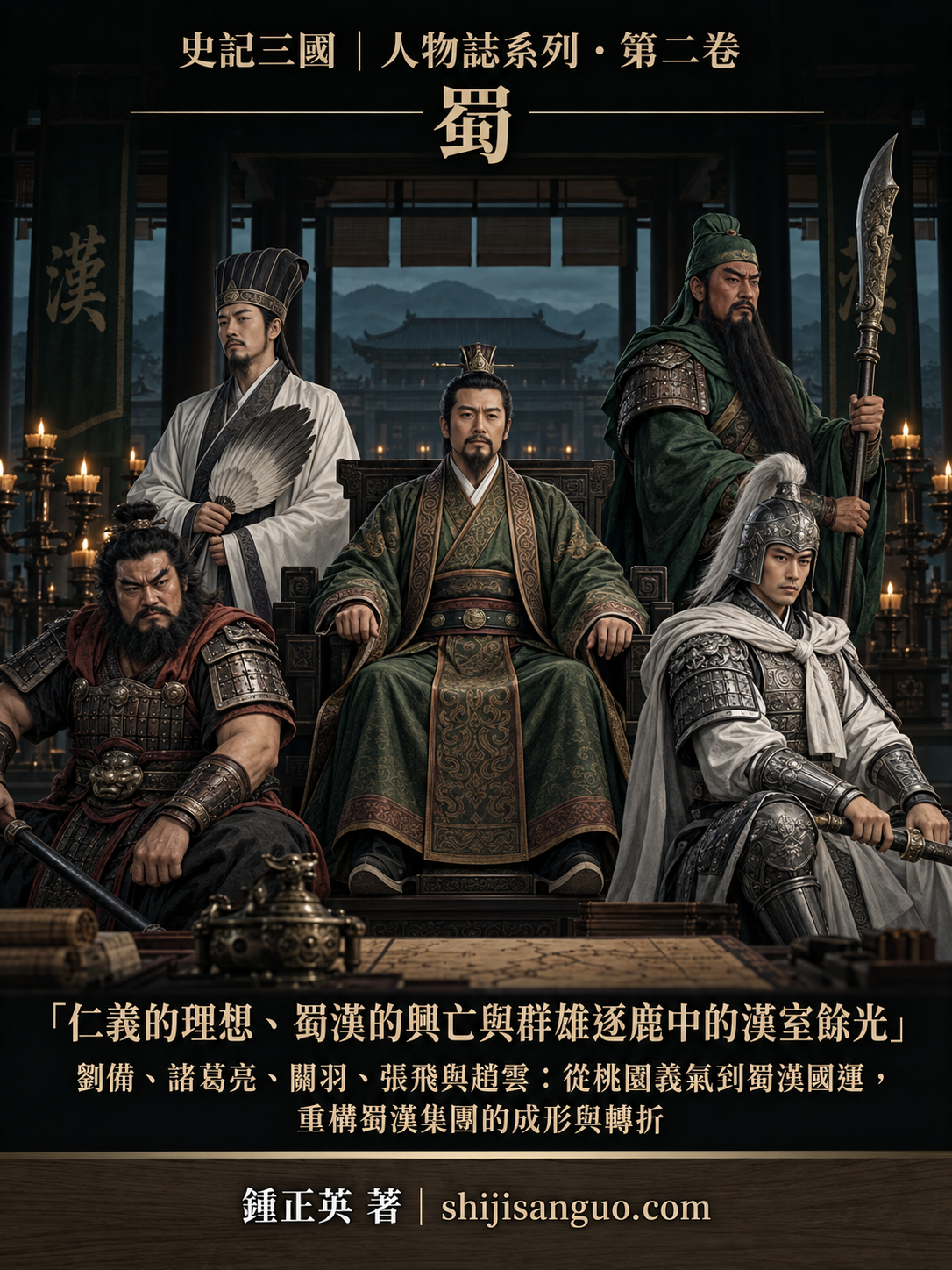
Begin with the lives of Liu Bei, Zhuge Liang, and other Shu Han figures, alongside biographical text, artistic reconstructions, and object illustrations. Illustrations explain forms, dates, sources, and relationships without treating memorial shrines or tombs as personal excavated objects.
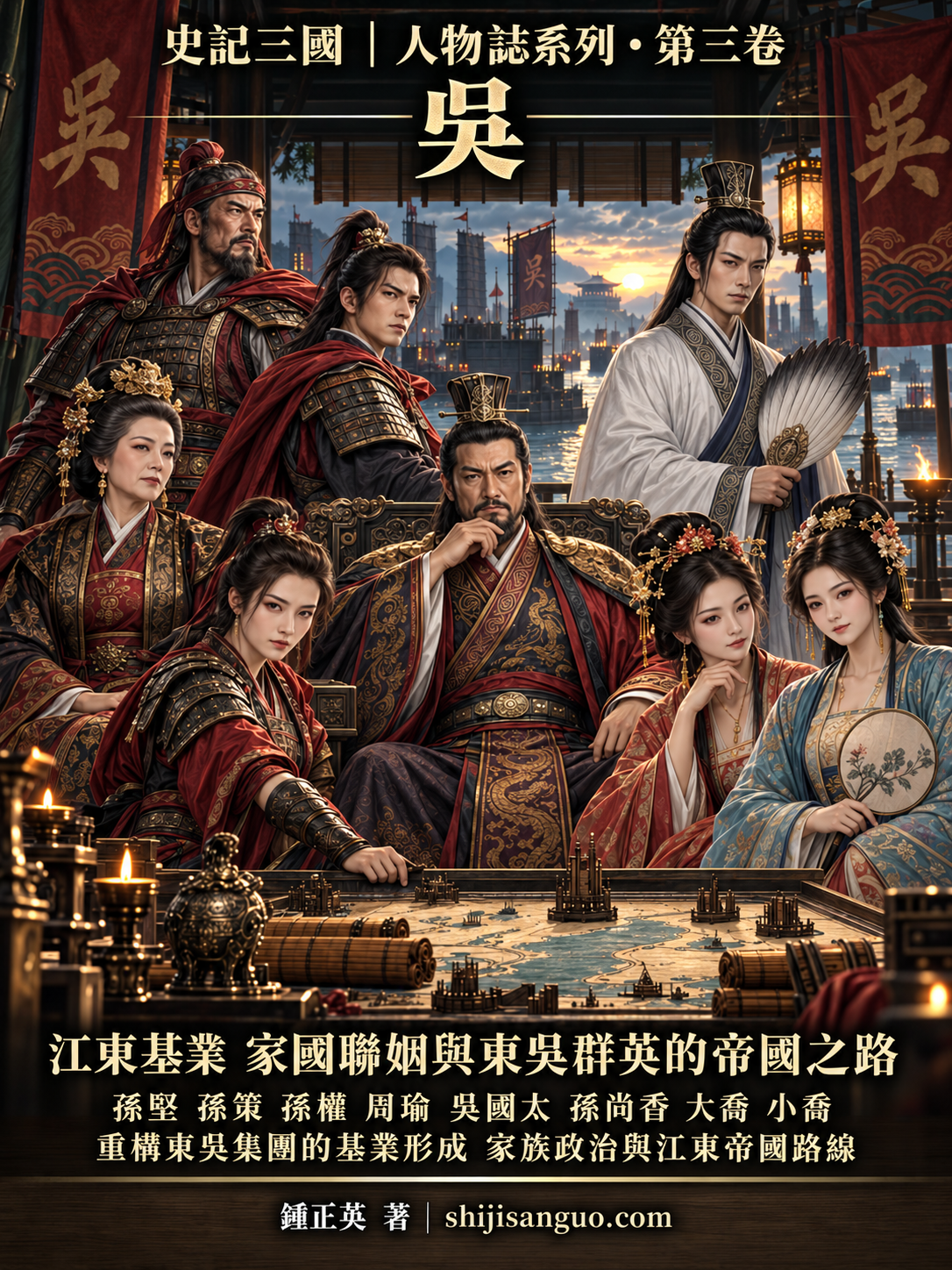
Read the Jiangdong power base through Sun Ce, Sun Quan, Zhou Yu, Lu Su, Lü Meng, and others. This volume separates person entries from object illustrations, identifying Zhu Ran's own tomb, family tombs, Wu bamboo slips, and modern replicas separately, not as famous generals' personal belongings.
Follow late Han warlords and figures of the central court, regions, and frontiers. Beyond person entries, separate illustrations cover the stone classics, bamboo and wooden slips, Liang Province bronzes, Han court seal-granting, and Ye City. Contextual objects are not treated as famous generals' personal belongings.
Source
Material: scope, language editions, English volume division, and links to biography descriptions in the same series on the main history's public details page; checked 2026-10-08. This is not verification of all-platform listings, prices, or transactions in this round.
Author of the Referenced Work: 鍾正英 / Zhong Zhengying · Checked: 2026-10-08
Shiji Sanguo covers 168–280 CE, from institutional fractures in the Eastern Han court to Western Jin reunification. It is a chronologically unfolding historical novel, a different series from the person-based Shiji Sanguo Renwuzhi (Biographical Profiles).
This page compiles public writing-method and series information; book descriptions do not establish availability, pricing, or image rights on all platforms.