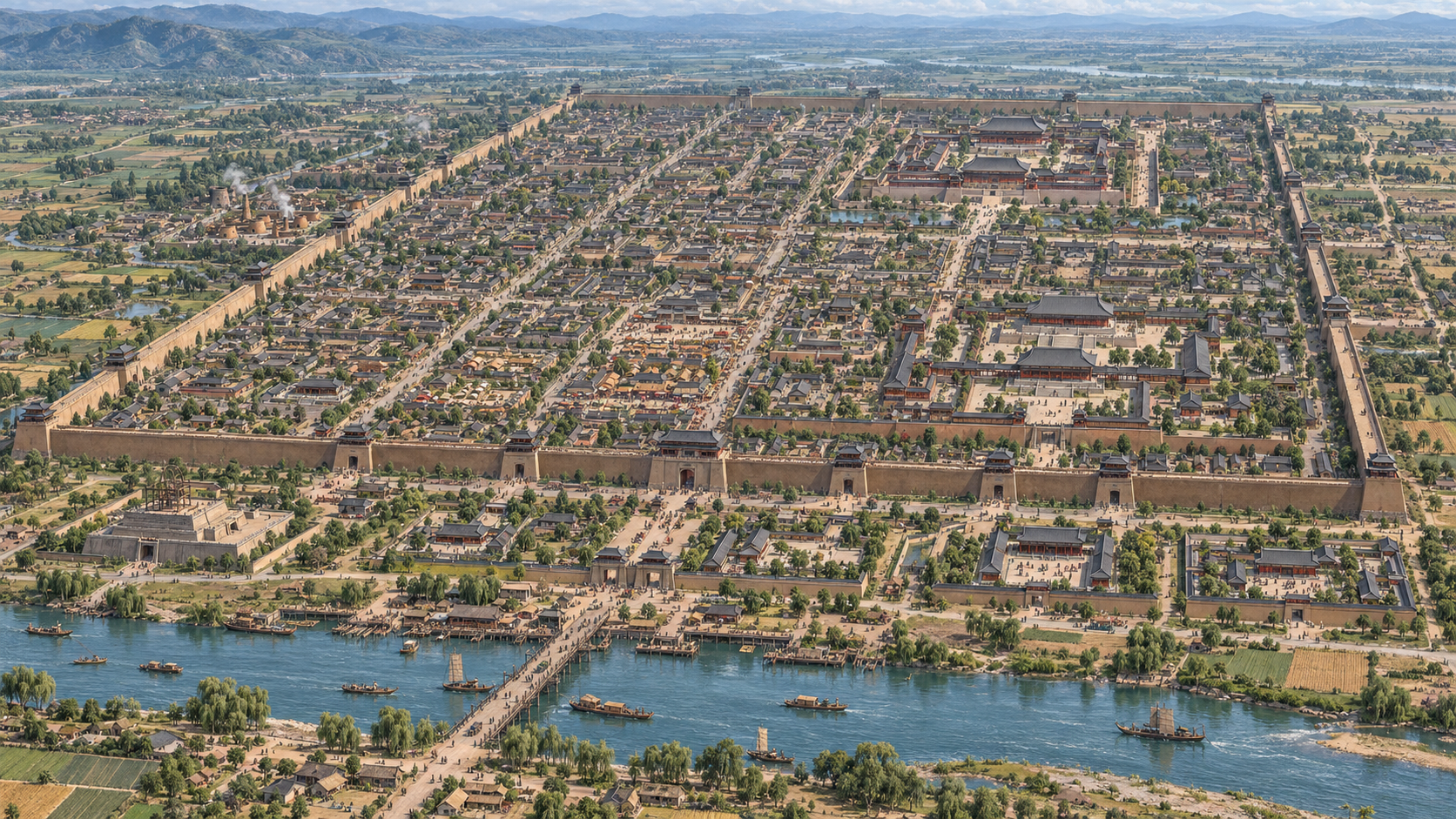
Artistic aerial reconstruction of Luoyang, with mountains, walls, palace precincts and riverbanks
Historical Narrative · Traditional Chinese · 168–280

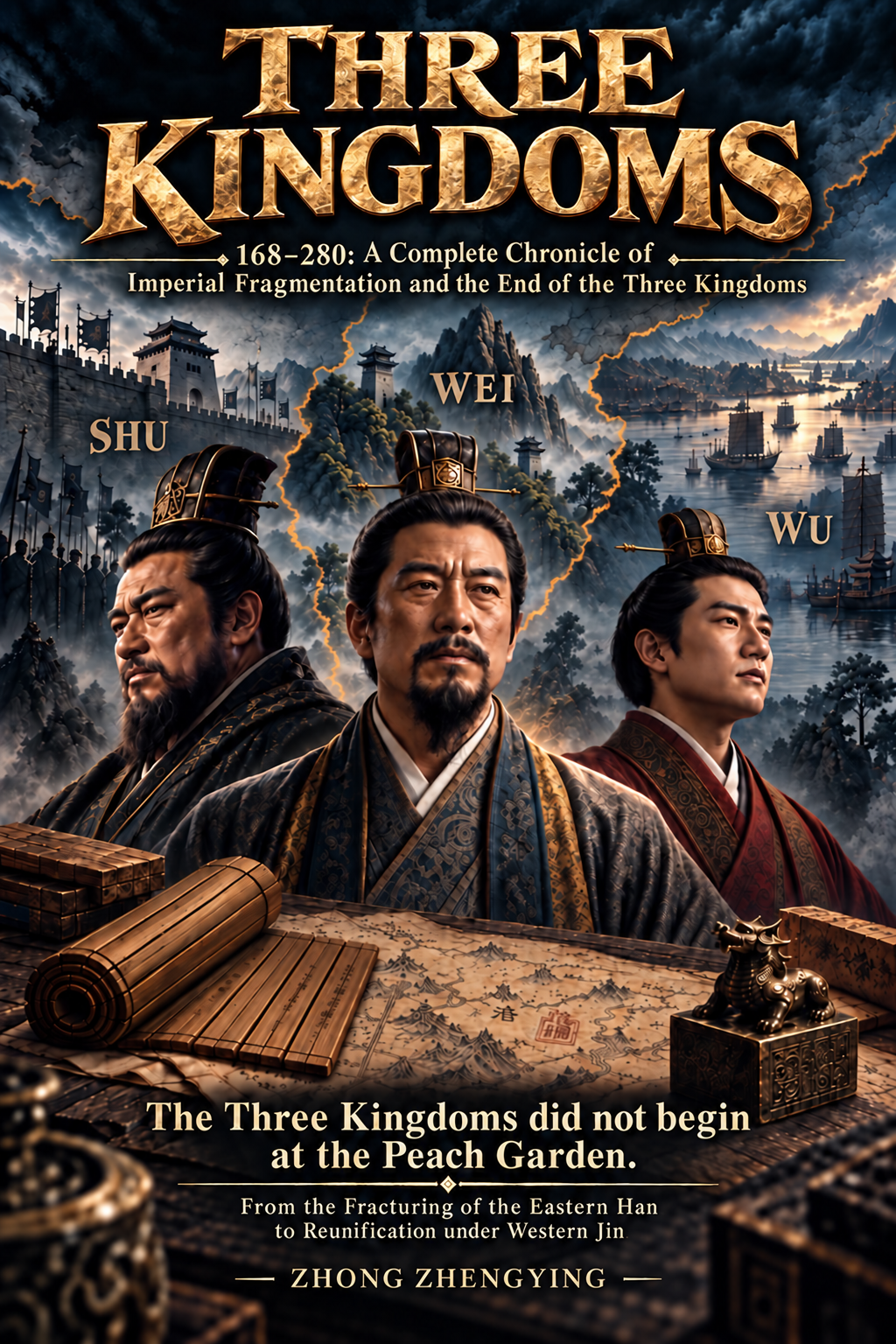
The Three Kingdoms did not begin in the Peach Garden.

史記三國 168—280

How did one empire become three rival kingdoms? From the Eastern Han court to Western Jin reunification, follow the choices that reshaped an age.

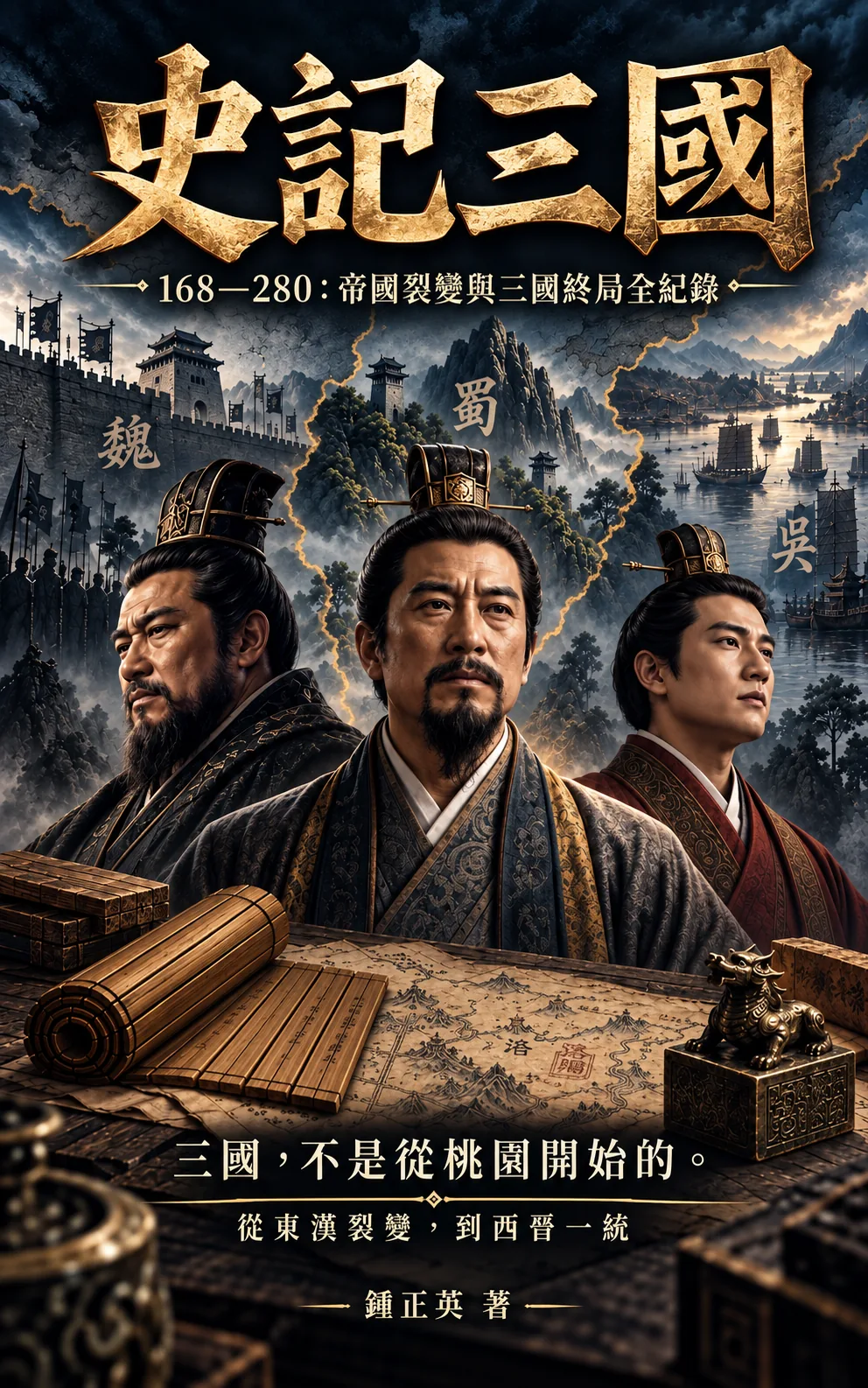
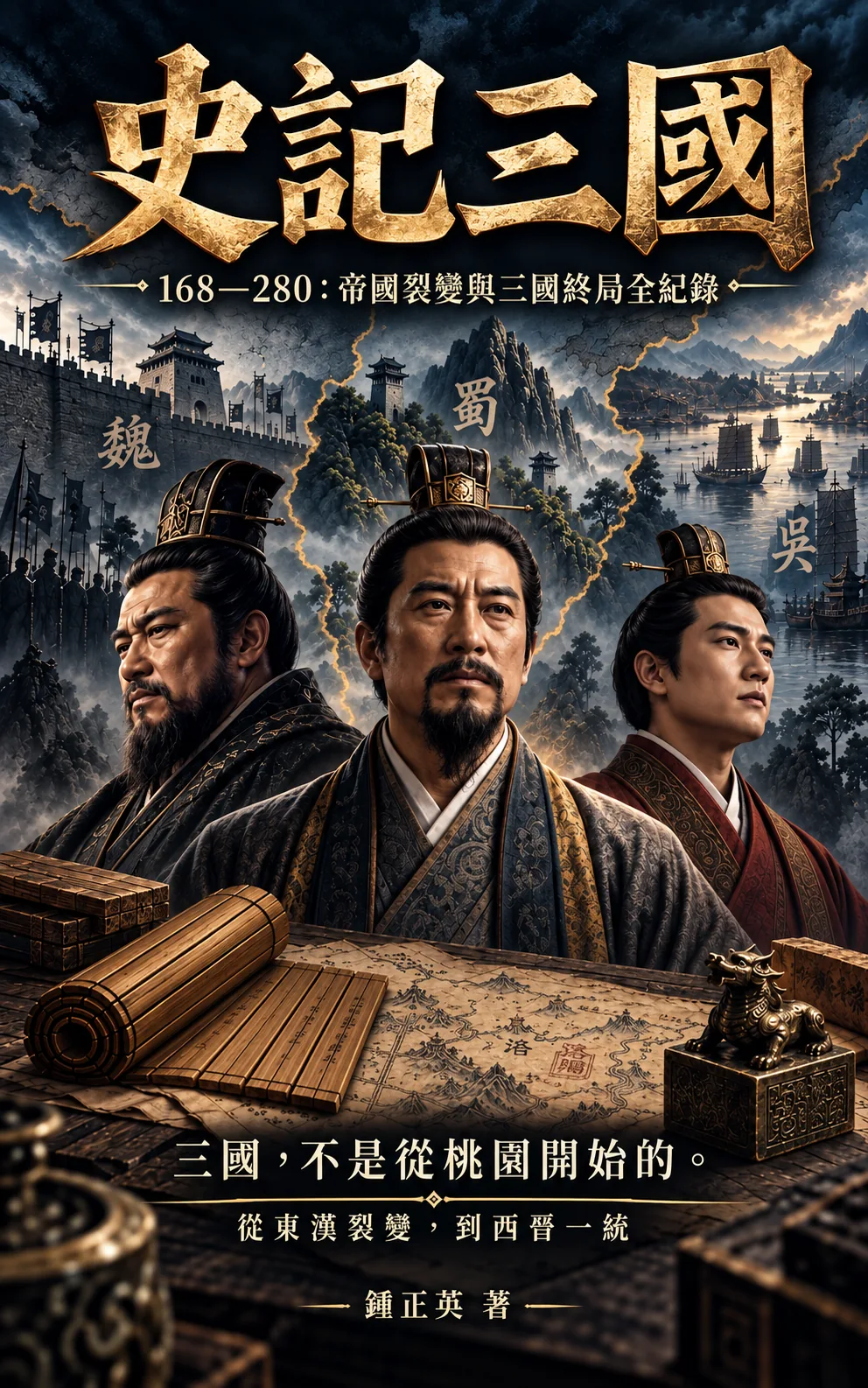
史記三國・Traditional ChineseEbook Cover
史記三國Historical Narrative · Ebooks in Four Languages / English Paperbacks

Scene: around 180 CE. An artistic reconstruction, not a photograph of an archaeological reconstruction.

Books

10 Editions · Five Works

Traditional Chinese

5 editions

Traditional Chinese · Ebook

史記三國

A chronological narrative spanning 168–280, from the late Han court to Jin reunification.

View Book
English

3 editions

Japanese

1 editions

Japanese · Ebook

史記三国

A chronological narrative spanning 168–280, from the late Han court to Jin reunification.

View Book
Simplified Chinese

1 editions

Simplified Chinese · Ebook

史记三国

A chronological narrative spanning 168–280, from the late Han court to Jin reunification.

View Book
An empire first
fractures, then come the Three Kingdoms.

This story does not begin simply with the arrival of familiar heroes. It opens at the Eastern Han court in 168: the emperor is young, and those inside and outside the palace gates compete for the power to turn words into orders.

Over the next century and more, the court, provinces, families and armies repeatedly realign. Each decision belongs not just to a hero, but to the movement of an age.

Follow the Journey, 168–280 ↗
I / 168

An Empire Off Balance

See how court power and fractures in institutions began to unsettle the empire.

II / Three Rival Kingdoms

Choices and Their Costs

Beyond victory and defeat, see how people confronted the situations before them.

III / 280

Beyond the End

Reunification is not an abrupt ending, but the outcome of a century of change.
One timeline
through the Three Kingdoms.

Explore eighteen turning points from the Eastern Han court to Western Jin's conquest of Wu. This is a guide to historical events, not a chapter list.

168–189The Eastern Han Court Loses Its BalanceCourt struggles, provincial uprisings and finally military upheaval in the capital.3 events
  1. Dou Wu and Chen Fan Confront the Eunuchs

    In the year Emperor Ling took the throne, Dou Wu and Chen Fan planned to eliminate the eunuchs. Their plan failed and both died; the court's power struggle had moved beyond debate.

    Source: Hou Hanshu, 69
  2. The Yellow Turban Uprising

    Zhang Jue's followers rose in rebellion, and the court mobilized troops. Provincial armed groups and military figures increasingly shaped the political situation.

    Source: Hou Hanshu, 71
  3. He Jin Is Killed; Dong Zhuo Enters the Capital

    After Emperor Ling's death, the conflict between He Jin and the eunuchs threw the capital into upheaval. Dong Zhuo entered Luoyang with troops, transforming the court once more.

    Source: Hou Hanshu, 72
190–219Rival Lords CompeteThe campaign against Dong Zhuo, Guandu, Red Cliffs and Hanzhong redraw the political map.5 events
  1. Provincial Forces Rise against Dong Zhuo

    Armies east of the passes rose against Dong Zhuo, who took the emperor west to Chang'an. Relations between the center and provinces would not readily return to their former state.

    Source: Sanguozhi, 1
  2. Emperor Xian Establishes His Court at Xu

    Cao Cao brought Emperor Xian to Xu. The emperor, imperial orders and military power were thereafter intertwined in one political center.

    Source: Sanguozhi, 1
  3. The Battle of Guandu

    Cao Cao and Yuan Shao confronted one another at Guandu, where Cao's army eventually prevailed. The balance of power in the north continued to change through the years that followed.

    Source: Sanguozhi, 1
  4. The Battle of Red Cliffs

    As Cao Cao advanced south, Sun Quan sent Zhou Yu and Cheng Pu to fight alongside Liu Bei. They repelled Cao's forces at Red Cliffs. Cao returned north, but competition in the Yangtze region continued.

    Source: Sanguozhi, 47
  5. Hanzhong and Liu Bei's Kingship

    Huang Zhong defeated Xiahou Yuan at Mount Dingjun. In the same year, Liu Bei became King of Hanzhong, highlighting the political and military importance of Yi Province and Hanzhong.

    Source: Sanguozhi, 36
220–229Three Imperial States Take ShapeAfter Han gave way to Wei, the rulers of Shu Han and Sun Wu successively assumed imperial titles.4 events
  1. Cao Pi Replaces Han with Wei

    Emperor Xian abdicated in favor of Cao Pi, ending the Eastern Han. The change of dynasty did not end warfare across the regions.

    Source: Sanguozhi, 2
  2. Liu Bei Becomes Emperor at Chengdu

    Liu Bei assumed the imperial title and named his state Han, known to history as Shu Han. His claim to continue the Han dynasty now had its own court.

    Source: Sanguozhi, 32
  3. Yiling and Liu Bei's Retreat to Yong'an

    Liu Bei campaigned east against Sun Quan, but his army suffered defeat near Yiling. Relations between Shu Han and Sun Wu underwent another major conflict.

    Source: Sanguozhi, 32
  4. Sun Quan Becomes Emperor

    Sun Quan formally assumed the imperial title. Wei, Shu Han and Wu now each had an emperor; their borders were not thereby fixed.

    Source: Sanguozhi, 47
234–249Leaders Depart; Power ShiftsTurning points on the frontiers and at court shape the years to come.2 events
  1. Zhuge Liang Dies on Campaign

    Zhuge Liang, Chancellor of Shu Han, died during a northern expedition. His successors took up the state's government and military responsibilities.

    Source: Sanguozhi, 33
  2. Sima Yi Eliminates Cao Shuang

    Sima Yi rose while the Wei emperor was visiting the Gaoping tombs. Cao Shuang and his associates were ultimately executed, changing the balance of power at the Wei court.

    Source: Jinshu, 1
263–280Two States Fall; Western Jin ReunifiesShu falls, Wei gives way to Jin, and finally Jin advances south and the ruler of Wu surrenders.4 events
  1. Shu Han Surrenders to Wei

    Wei's forces entered Shu, and Liu Shan surrendered. The three-way division first ended in the southwest.

    Source: Sanguozhi, 33
  2. Sima Yan Establishes Jin

    The Wei emperor abdicated and Sima Yan took the throne. Wei's dynastic name disappeared, while Sun Wu remained south of the Yangtze.

    Source: Jinshu, 3
  3. Western Jin Launches Its Campaign against Wu

    The Jin court launched a multi-front offensive, with land forces and river fleets advancing together. Reunification required military campaigns; it had not been achieved by abdication alone.

    Source: Jinshu, 3
  4. Sun Hao Surrenders; Wu Falls

    Jin's forces reached Jianye, and Sun Hao, ruler of Wu, surrendered. The division that had followed the rise of Wei, Shu and Wu came to an end.

    Source: Jinshu, 3

History is the framework;
story brings it to life.

Shiji Sanguo uses existing research into the official histories as its framework. Conversations, actions, waiting, documents in transit and daily life are reconstructed without changing the people, chronology, limits of knowledge, causes or outcomes.

A Note to Readers

Reconstructed passages are not surviving verbatim records. Consult the book's notes for differences among sources and the main areas of reconstruction. This website does not present literary scenes as quotable primary-source text.

Begin with Chapter One
and enter Luoyang.

Discover the Story, Then Choose a Platform

Read Chapter One ↗
Sample Reading

The website offers Chapter One of the Traditional Chinese edition, including six notes. Refer to each platform's product page for the complete book.

Selected from the author's first chapter; this does not claim that every chapter has completed individual QA.
Cover of Shiji Sanguo, 168–280, Chinese edition

Choose How to Read.
Enter the Complete Story.

The historical narrative and biography series each have book descriptions and verified edition records. Open a sample or a confirmed reading platform from the catalog. Books without a confirmed purchase link retain their descriptions.

View All Books and Editions

This website does not collect payments or ask for account passwords. Purchases and reading services are provided by the linked platforms.

Your Books

Saved only in this browser; not synchronized

Recently Viewed

No recently viewed books yet.

Saved Books

No saved books yet.